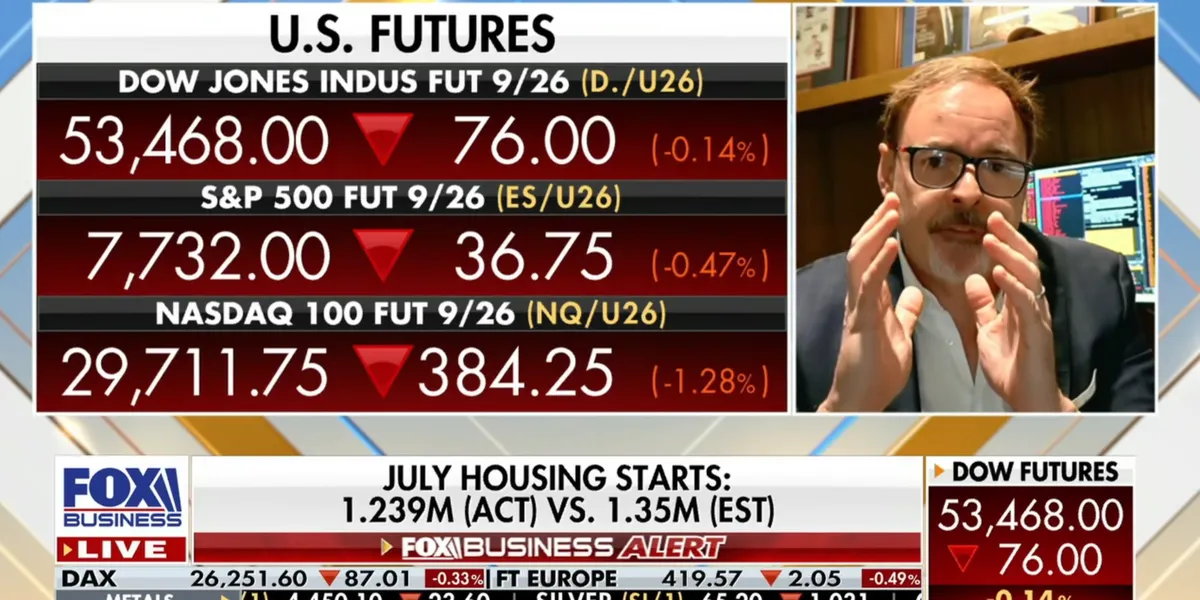
Investor and market expert Lawrence McDonald highlighted a series of “red flashing signals” Tuesday during an appearance on Fox Business, signals that he warned were “very similar” to conditions leading up to the 1987 global market crash known as Black Monday.
Read more ‘A perversion’: Trump official’s ‘deeply un-American’ conduct triggers major ABC lawsuit
Founder of The Bear Traps Report and a former Lehman Brothers vice president who co-wrote the bestselling account of the bank’s 2008 collapse, “A Colossal Failure of Common Sense,” told Fox Business host Cheryl Casone that President Donald Trump’s tariffs were producing weaker results even as bond markets flash global warning signs.
“We’re getting diminishing returns on the tariffs, but on the bond side, this is a global story,” McDonald said.
He explained that climbing rates are dragging bond prices lower, making bonds an increasingly attractive rival to stocks for investor cash.
“When bonds start to offer competitive returns relative to stocks, that’s when the risk-reward deteriorates – it’s very similar to the summer of ’87,” McDonald said. “I’m not saying we’re going to crash, but historically, when bonds start to threaten stocks at this degree, especially with global rates across the G7 going up, investors watching us right now have to have extreme caution.”
Read more Rampaging Butler shooter targeted Trump foes days before assassination attempt: FBI
Months before Black Monday, the Dow Jones Industrial Average plunged 22.6% on Oct. 19, 1987, still the steepest single-day percentage loss the index has ever posted. Casone said she understood too well the “red flashing signals” McDonald was “putting out there.”
McDonald’s reference to “diminishing returns” reflects a well-documented tension: tariffs have pushed the effective U.S. import tax rate to its highest level since 1969 without meaningfully shrinking the trade deficit they were designed to close, instead adding roughly $900 to the average household’s tax bill this year.
When the Supreme Court struck down a significant share of Trump’s tariffs in February, the ruling shook Treasury markets by threatening to swell the federal deficit and add fuel to an economy already contending with elevated inflation, one of the pressures keeping the Federal Reserve cautious about cutting rates and yields elevated.
Read more Jeanine Pirro’s event abruptly canceled under mysterious circumstances as Trump seethes