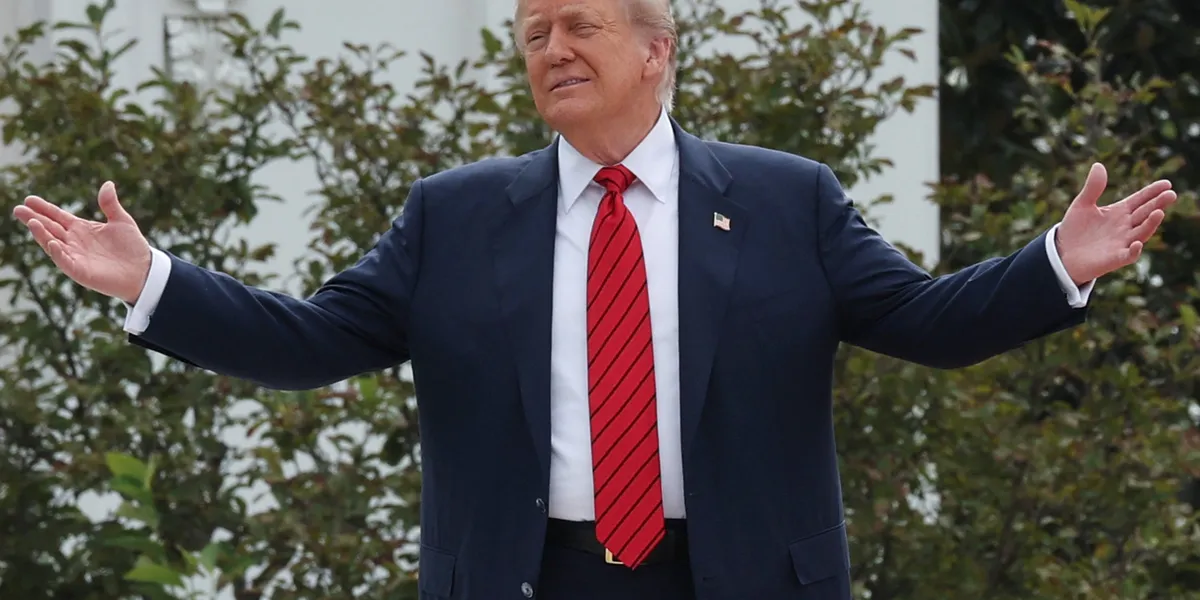
President Donald Trump’s administration is facing backlash after quietly loosening the rules around a genetically engineered tree — and, internal documents suggest, may have already broken its own containment rules doing so.
Read more Terror move backfires as ‘loser’ Proud Boys’ socialist hate collides with love for donuts
The controversy traces to April, when the administration planted two genetically modified American chestnut trees in President’s Park, across from the White House, as an Arbor Day photo op, reported the Washington Post. The variety, Darling 54, carries a wheat gene designed to resist the blight that essentially wiped out the species a century ago.
Internal documents reviewed by the Post, along with a source not authorized to speak publicly, indicate staffers failed to control the trees’ pollen-releasing flowers — an apparent violation of the USDA permit requiring “confinement of the regulated article to prevent its unauthorized release, dispersal, and/or persistence in the environment.”
Had that transgenic pollen drifted to wild, unmodified chestnuts still growing nearby — including in Rock Creek Park, Silver Spring, the U.S. Capitol grounds and Congressional Cemetery — it could have pollinated them, introducing an engineered gene into the wild outside any scientific oversight.
“As part of the research protocol, that isn’t supposed to happen,” said Michael Goergen, president of the American Chestnut Foundation. “What could it mean in terms of contamination of the gene pool?”
The USDA insists there were no permit violations, saying the trees were planted more than a mile from other chestnuts. SilvaBio, the company that organized the planting, says staff removed what flowers they could and had the National Park Service handle the rest, but neither claim addresses the internal findings directly.
Read more ‘It’s trash’: CBS staffers leak Bari Weiss move for ‘sensationalized’ attack
Four months later, the USDA deregulated Darling 54 entirely, eliminating the permit requirement for small-scale plantings of the modified tree, and one scientist involved said officials were already discussing deregulation the day the trees went into the ground.
Critics say the episode reflects a broader recklessness in rushing a genetically engineered organism into the wild while sidestepping the administration’s own safeguards.
Michael Hansen, a scientist at Consumer Reports, called it “uncharted territory,” warning that transgenic trees “could affect the fitness of the trees or how they interact with the ecosystem. You don’t know until you do those studies.”
Even the tree’s biggest institutional booster has soured on it. The American Chestnut Foundation dropped its support for Darling 54 in 2023 after scientists mistakenly planted that variety instead of the intended Darling 58.
Whether Trump’s chestnuts even survive is unclear. Darling 54 resists blight, but not root rot, which thrives in Washington’s climate — the same fate that killed a chestnut George W. Bush planted at the White House in 2005. Two decades later, no trace of that tree remains.
Read more ‘We do not share that lightly’: Pentagon breaks bad news to families about Trump’s war