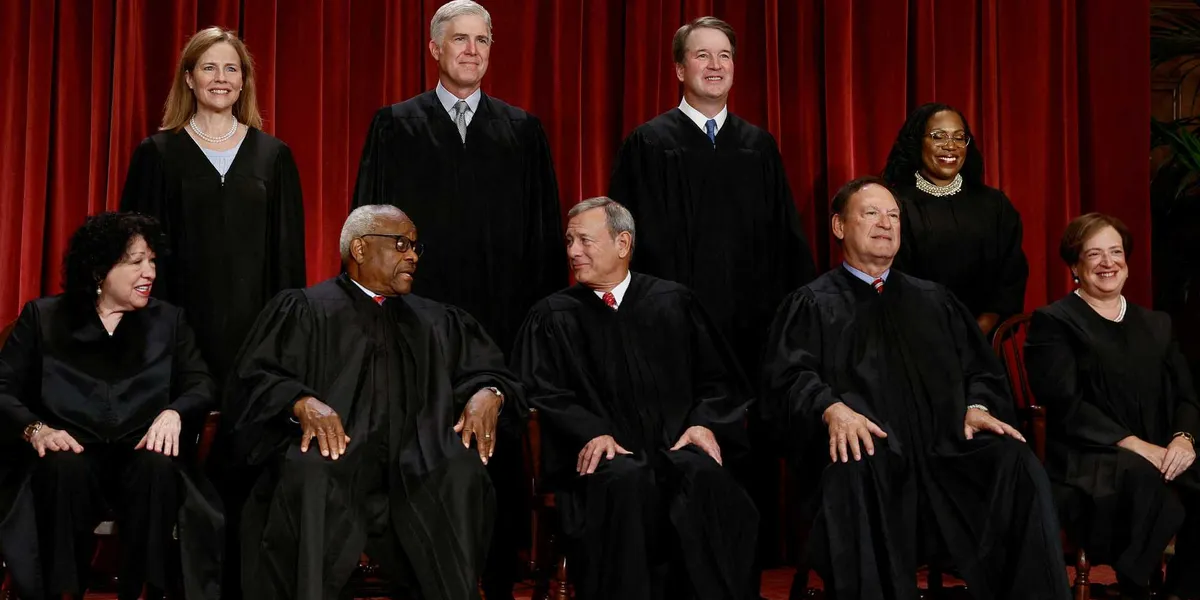
A future Congress could undo some of the Supreme Court’s most consequential rulings from this term, a new Slate opinion piece argues, naming five federal laws an analyst says lawmakers should move to restore.
Read more Maine Democrat in marquee race accused of sexual assault
Writing Monday for the outlet’s “Opinionpalooza” series, columnist Alexis Romero contends the justices spent the term narrowing, rewriting, and gutting federal statutes while claiming to defer to lawmakers. Romero names five laws that most need “saving,” insisting Congress has the power to override the court’s statutory rulings.
First is the Voting Rights Act. In Louisiana v. Callais, decided 6-3 in April, Justice Samuel Alito’s opinion narrowed Section 2 in a way critics say makes racial gerrymandering claims nearly impossible to win. Second is the Immigration and Nationality Act, which Romero says the court repeatedly bent in President Donald Trump’s favor, including in Blanche v. Lau, letting border officers treat returning green-card holders as new arrivals without solid proof of a crime. Third and fourth are the First Step Act and habeas corpus, both of which Romero says the court quietly narrowed for incarcerated people.
Fifth is Title IX. The column points to the June 30 ruling in West Virginia v. B.P.J., where a 6-3 court upheld state bans on transgender athletes in girls’ and women’s sports, and argues lawmakers should write protections for gender identity directly into the law.
Romero writes that the statutory fights are the ones Congress is most likely to forget:
Read more MAGA melts down as Bruce Springsteen torches Trump in new interview: ‘He is a coward’
“Many of these statutory issues may seem under the radar compared to the constitutional monstrosities on gun rights and presidential power the court also released this term. But that’s exactly why they’re so important—because these are the areas a Congress is most likely to forget to address. In the words of one former judge, ‘Most Supreme Court decisions never come to the attention of Congress.’ Starting in 2027, that needs to change.”
The column says history proves it can be done, citing the Lilly Ledbetter Fair Pay Act of 2009, which overrode a ruling limiting the window for pay-discrimination suits. It acknowledges Trump could veto any such bill, but Romero writes:
“It would be a mistake for Democrats to tweet about the wrongness of the court’s decisions in 2026, and then, if they get into power in 2027, just sit on their hands and delay passing bills they doubt could get past a Trump veto.”
Read more Trump ‘preference’ for ‘white people’ costs him in blistering court ruling