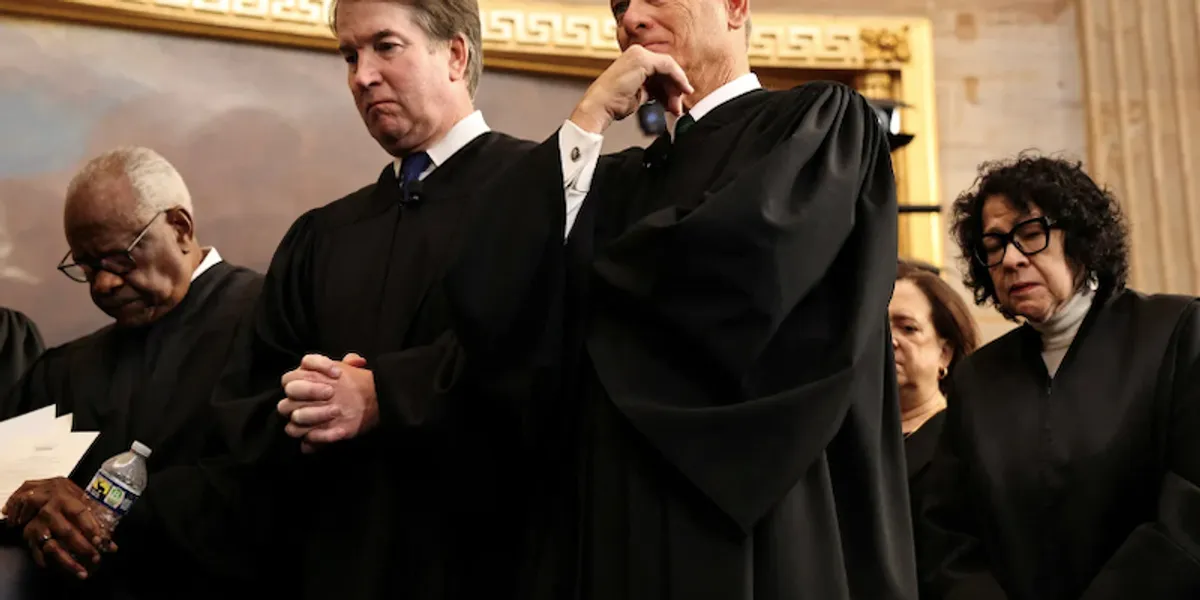
The Supreme Court’s just-completed term was so extreme that even its apparent wins for democracy can’t redeem it, according to civil rights litigator Sherrilyn Ifill, because the real story is how the justices reached the outcomesthe outcomes.
Read more ‘Huge reversal’ as ICE suspends most traffic stops after two fatal shootings: report
Speaking on Slate’s Amicus podcast during the show’s annual Breakfast Table roundtable, the Howard University School of Law professor was asked how bad the term was in the aggregate. Her verdict: “Plenty bad. Very bad.”
Ifill argued that tallying up winners and losers misses the point. What matters, she said, is the reasoning, the splits, and “what license did the court take to get to the decisions that it made.”
She pointedly refused to set aside the birthright citizenship case, one of the term’s few results critics cheered. In Trump v. Barbara, the court struck down President Donald Trump’s executive order seeking to end automatic citizenship for children born on U.S. soil to undocumented or temporary residents. The decision was widely read as a rebuke to the president’s expansive claims of power.
Read more Republican snubbed from Camp David meet takes her revenge out on GOP budget
Ifill noted the end vote hid a narrower 5–4 split on the underlying constitutional question.
“To me, that’s what takes this term off into the stratosphere. Some of the decisions are catastrophic and terrible, but even the decisions that seem to be OK, much of the reasoning demonstrates that this court has separated itself from any sense of the need for consistency, for respecting stare decisis, for judicial restraint, for discipline, for unanimity — all of the things that we think of as virtues of judicial decisionmaking that would cabin judges from being able to exercise their extraordinary power in an abusive way,” said Ifill.
Read more Trump warned about ‘insanity’ of his Thursday address to the nation