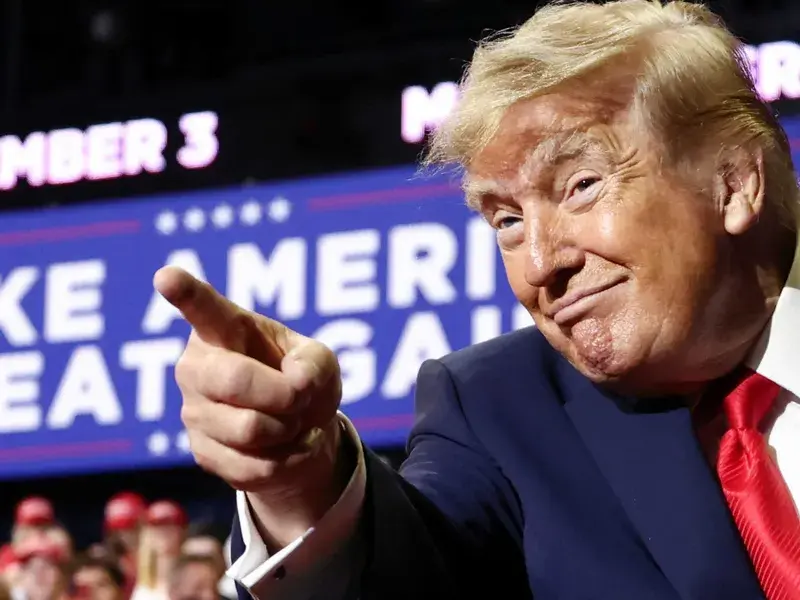
President Donald Trump’s economic record has been so bad that one analyst concluded he must have wrecked it on purpose.
Read more ‘Pick a lane’: Hostility mounts as Trump’s handpicked Fed chair preps for a major first
Rather than resulting from external shocks, the 80-year-old president’s economic struggles stem largely from his own administration’s decisions, MS NOW’s James Downie argued Wednesday.
The column opens with Treasury Secretary Scott Bessent’s exasperated response Monday, while announcing new sanctions on Iran, to the suggestion he might have deliberately damaged the economy: “Why would I want to blow up the global financial system?”
Downie argues he might have unwittingly made a reasonable point.
“Bessent may think that’s still a self-evidently ridiculous question,” Downie wrote. “George W. Bush didn’t want a Great Financial Crisis, nor did Herbert Hoover seek to start a Great Depression. Surely no White House would deliberately hurt the global economy.”
“Yet for the first time ever, that’s not the case,” he added. “At home and abroad, the past few days have laid bare the extent to which President Trump’s troubles on the economy are self-inflicted.”
The 30-year Treasury bond yield hit a 19-year high last week, prompting Bessent to expand government debt buybacks. Yields dipped only briefly before returning to prior levels, which the columnist attributes to investor concern over the $40 trillion national debt — a debt load it says traces substantially to the Bush-era and Trump-era tax cuts, citing an analysis from the Center for American Progress’ Bobby Kogan.
Read more Mystery mires Sean Duffy road trip as IRS has no record of non-profit funding it
The columnist also points to Trump’s decision to allow 300,000 tons of tariff-reduced beef imports just before the midterms, framing his stated goal of lowering ground beef prices as a tacit admission that American consumers, not foreign exporters, have been absorbing tariff costs.
On the Iran conflict, Downie notes continued closure of the Strait of Hormuz, sustained high oil prices, and reports that companies are raising prices on goods including beer, french fries, paint and packaging to offset rising costs.
The piece further highlights renewed U.S.-Canada trade tensions, with both countries announcing new tariffs. It quotes economist Paul Krugman’s observation that the U.S. economy relies on Canadian goods more than commonly recognized, citing Canadian oil exports to the upper Midwest and electricity supplying roughly two million homes in Maine.
It comes as no surprise then, he argued, that July data shows retail sales fell for the first time in nine months and job losses in the broader economy.
“Presidents usually get far too much credit or blame for the state of the economy,” Downie wrote. “But in Trump’s case, the causation is much clearer. And it means a key part of his political image is backfiring.”
Read more ‘Damage has been done’: Wall Street turns on scrambling Trump Cabinet member