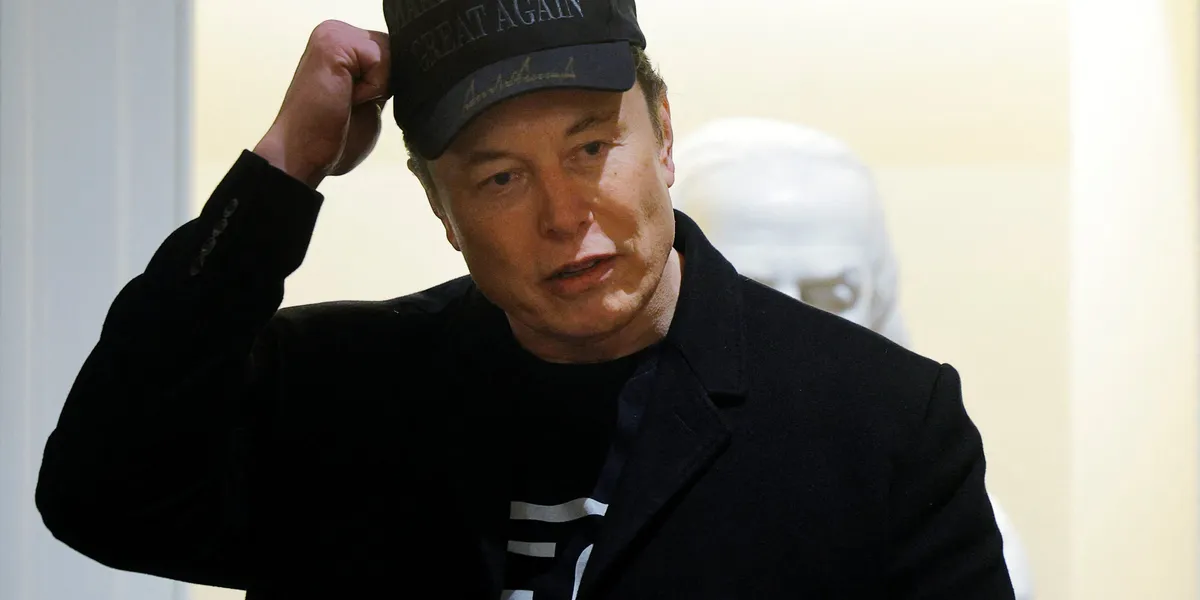
Elon Musk’s X Corp. just lost a federal lawsuit aimed at blocking a New York law forcing social media companies to publicly disclose how they handle hate speech, extremism and disinformation on their platforms.
Read more Jared Holt: Republicans have disinformation researchers in their crosshairs
U.S. District Judge John Cronan, an appointee of President Donald Trump, against Attorney General Letitia James on Wednesday, ruling the company’s First Amendment claims simply didn’t hold up. X had argued the state law violated its free speech rights by forcing the platform to disclose sensitive details about its content moderation policies for categories like hate speech and foreign political interference.
Cronan wasn’t persuaded, siding squarely with transparency.
“Such disclosure furthers, rather than hinders, the First Amendment goal of the discovery of truth,” the court wrote.
New York’s 2024 law requires social media companies to semiannually report whether their terms of service define categories like hate speech or disinformation, describe their moderation policies for those categories, and disclose data on flagged and removed content. Companies that fail to comply face civil penalties of up to $15,000 per violation per day.
Read more ‘Classless’ GOP senator walloped by grieving family over ‘raw material’ in attack ad
X argued the law forced it to reveal politically fraught “opinions” about controversial content categories, pointing to a favorable Ninth Circuit ruling that struck down a similar California law. But Cronan rejected that comparison, ruling New York’s law only requires disclosing what policies X actually has, not why the company adopted them, meaning it counts as purely factual commercial speech subject to a more lenient legal standard.
The judge also rejected X’s separate argument that the law was preempted by Section 230’s protections for how platforms moderate content, noting the disclosure requirement doesn’t penalize X for its actual moderation decisions.
With the case dismissed entirely and no path to amend the complaint, the ruling hands New York regulators a clear win in the broader legal fight over how much transparency states can demand from social media giants.
Read more GOP nominee’s stunning ‘secret’ caught on audio as ‘likely illegal’ scheme takes shape