An attached garage can make a household move easier—or unexpectedly complicated. It may provide a wide route for bulky furniture and appliances, but it can also be packed with tools, bicycles, storage bins, sports equipment, seasonal decorations, and years of accumulated belongings. Before moving day arrives, homeowners need to treat the garage as a separate part of the relocation plan.
For a Greenville household, organizing this space early can create a cleaner path to the truck and prevent garage items from becoming an afterthought. A little preparation can also make unloading at the new property much more efficient.
Start With a Garage-Only Inventory
Begin by walking through the garage before tackling the rest of the home. Make a list of everything that needs to move, including items stored on shelves, inside cabinets, along walls, and in overhead storage.
Separate belongings into categories such as tools, outdoor equipment, household storage, seasonal decorations, and items that can be donated or discarded. Garages often contain duplicates and things that have not been used for years, making them a natural place to reduce the moving load.
If you are comparing relocation options for a move within North Carolina, https://milestonerelocation.com/greensboro can be useful when researching professional moving services and planning transportation between communities.
Check Heavy and Awkward Items
Garages frequently contain some of the home’s heaviest possessions. Workbenches, shelving units, lawn equipment, free-standing cabinets, and large tool chests can require more planning than ordinary cartons.
Measure bulky objects before moving them. Determine whether they can pass through the garage door, interior doorway, or another available route without removing unnecessary components.
Use the Garage as a Moving Advantage
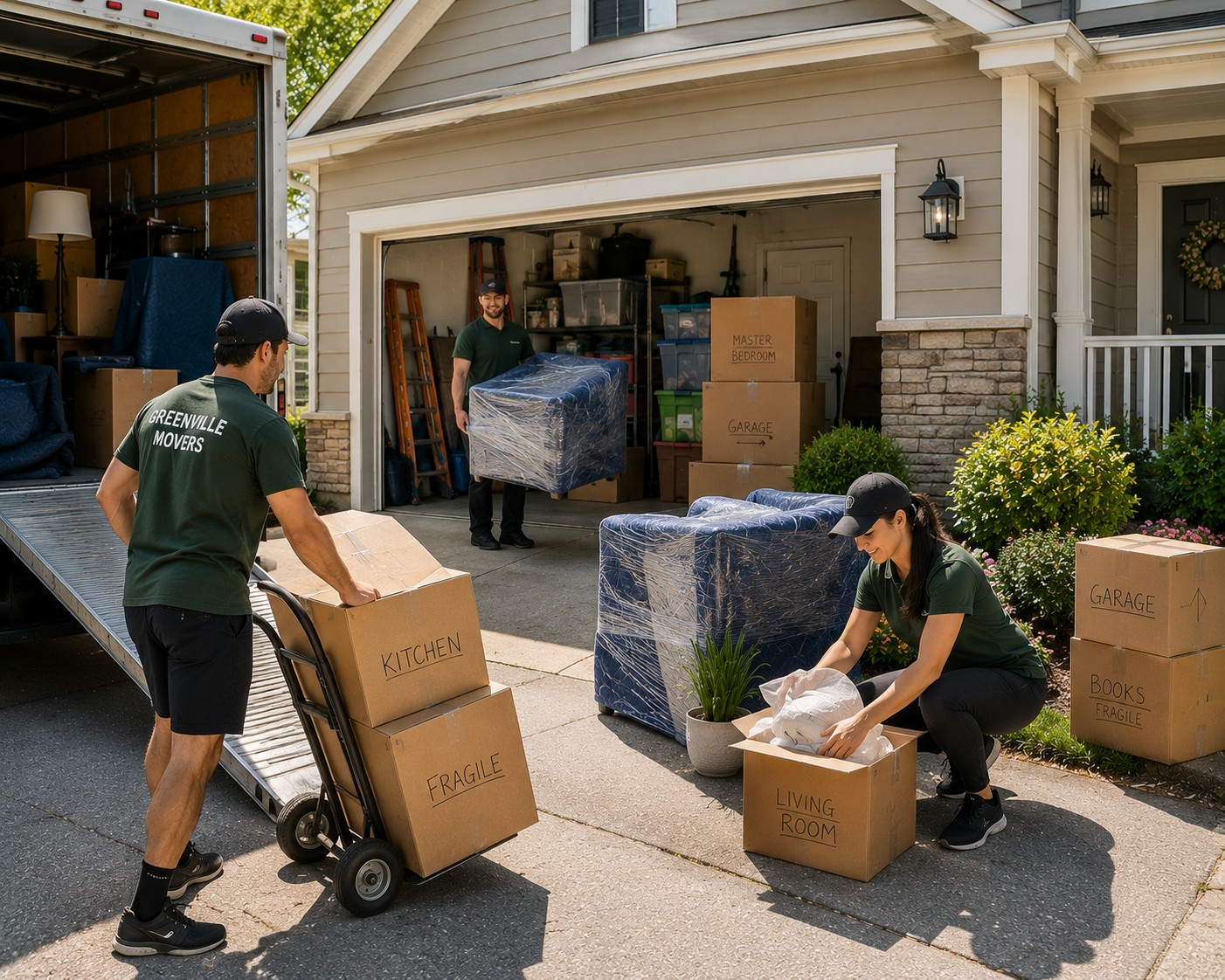
An attached garage can provide an excellent access point because it often connects directly to the driveway. If the truck can park close to the garage entrance, heavy belongings may have a shorter route to the vehicle.
Movers in Greenville can take advantage of this access when the pathway is clear and suitable for carrying furniture and boxes.
Clear the Driveway and Garage Door
Remove vehicles before the moving crew arrives. Relocate bicycles, trash containers, garden tools, and other objects that could interfere with the carrying route.
Check that the garage door opens fully and that its operating mechanism works correctly. If the garage entrance has a raised threshold or uneven surface, identify it in advance so movers can account for the transition.
Pack Garage Belongings Differently

Not everything stored in a garage belongs in an ordinary moving carton.
Group Similar Equipment
Use sturdy containers for hand tools, hardware, gardening supplies, and other small objects. Keep screws, fasteners, and removable parts together in labeled bags.
Long items such as rakes, shovels, poles, and certain sports equipment should be secured so they cannot shift during transportation. Protect sharp edges and avoid placing fragile belongings alongside exposed metal components.
Any potentially hazardous, flammable, or restricted materials should be handled according to applicable disposal or transportation requirements rather than automatically loaded with household goods.
Protect the House During Garage Access
The garage may provide a convenient entrance, but repeated traffic can still bring dirt and debris into the home.
Protect vulnerable flooring where appropriate and keep the transition between the garage and living areas clear. If the garage connects to a kitchen, mudroom, or hallway, establish a defined carrying route so people are not crossing the entire house unnecessarily.
Movers in Greenville can work more efficiently when large furniture and boxes have a predictable path from their original rooms to the garage and then to the truck.
Prepare the New Garage Before Arrival
The destination garage should be organized before the truck reaches the property. Decide where tools, storage bins, bicycles, outdoor equipment, and work surfaces will eventually go.
Do not immediately fill the center of the garage with random boxes. Maintaining an open pathway makes unloading easier and gives you room to reposition larger belongings.
Put Frequently Used Items Within Reach
If certain tools or outdoor items are used regularly, avoid burying them behind long-term storage. Label boxes according to their intended area and keep essential equipment accessible.
This approach turns unpacking into a gradual organizational process rather than another overwhelming project.
Coordinate the Main Household Move
The garage should support the broader relocation rather than operate independently. Identify which large household items will use the garage route and which should leave through other entrances.
Discuss unusual furniture, appliances, and oversized belongings with the moving crew before loading begins. This allows the team to establish an efficient order instead of repeatedly changing plans.
For a homeowner, the attached garage can become one of the most useful features of the property during relocation. Once unnecessary possessions are removed, pathways are cleared, bulky items are measured, and storage is organized, the space can function as a natural bridge between the house and moving truck. Careful planning and assistance from experienced Movers in Greenville can turn a garage filled with years of belongings into an efficient part of moving day.