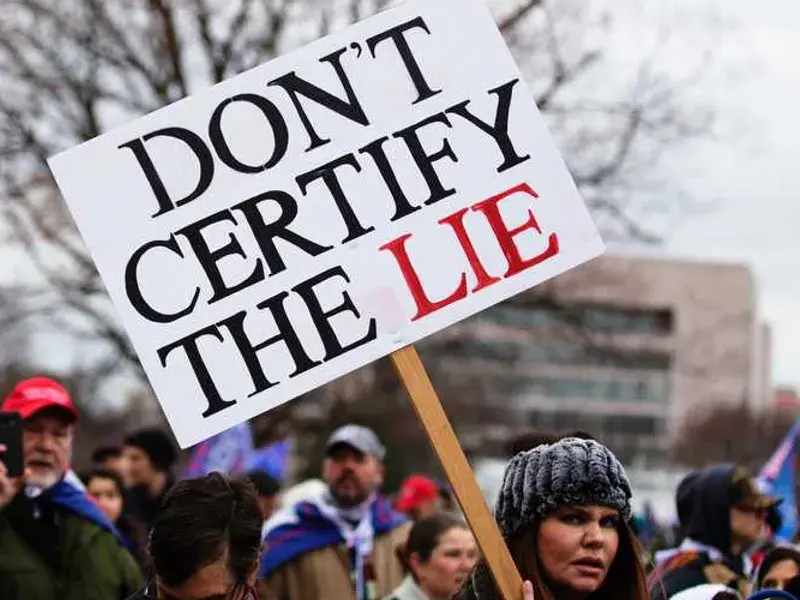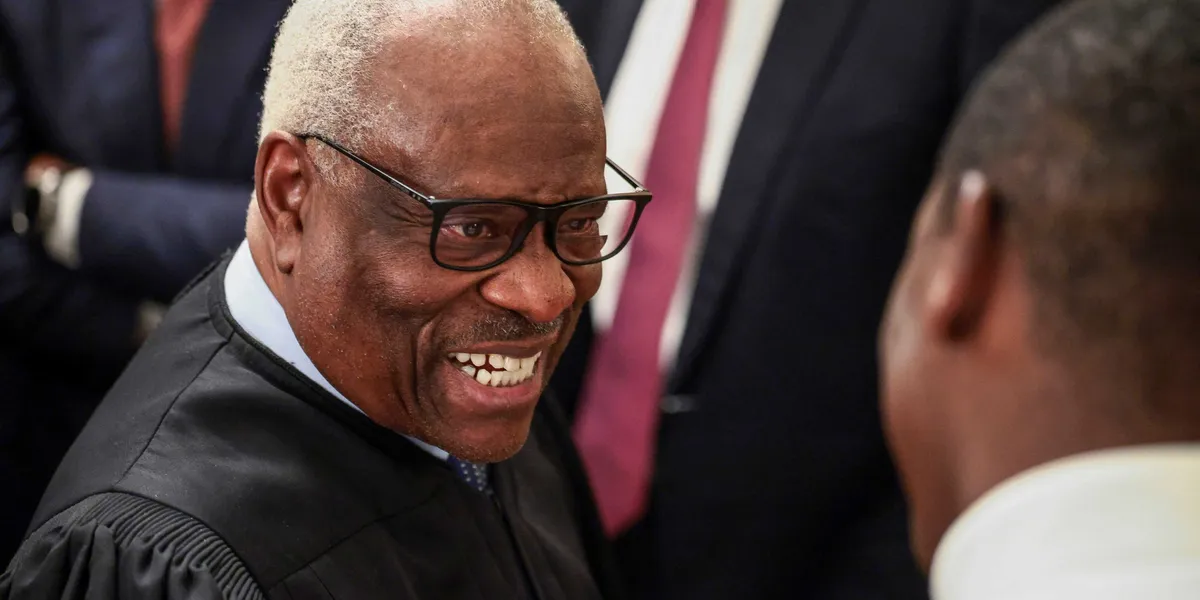
As the U.S. Supreme Court prepared to determine the fate of Section 2 of the Voting Rights Act in the landmark case, Louisiana v. Callais, MAGA groups and conservative nonprofits connected to far-right megadonors that filed briefs in support of weakening the historic civil rights law took in record-breaking amounts of dark money, according to new research.
Read more Jared Holt: Republicans have disinformation researchers in their crosshairs
Seven nonprofits with various ties to President Donald Trump, conservative megadonor Leonard Leo or other wealthy right-wing figures who filed briefs in the Callais case took in nearly $105 million through donor-advised funds, a dark money vehicle, between 2021 and 2024, according to new analysis from progressive watchdog group, True North Research.
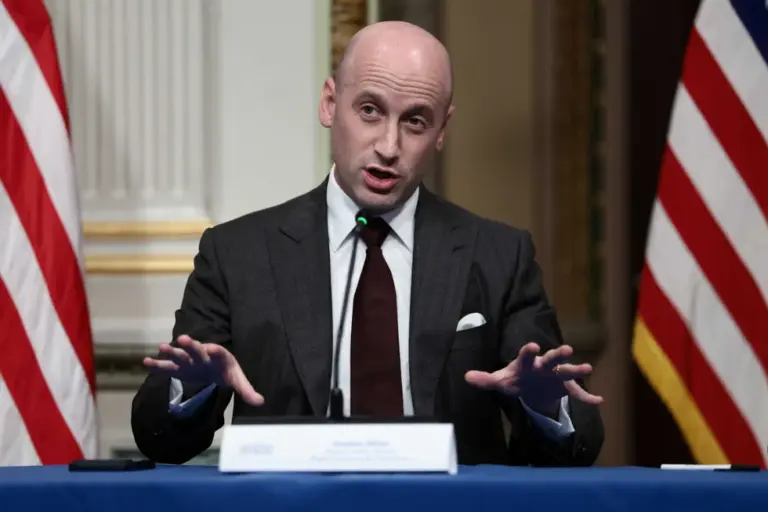
That’s seven times the donor-advised funding those groups received in the previous three-year period, according to the research. Of those nonprofits, the Trump-aligned America First Legal Foundation took in by far the most money from donor-advised funds — more than $58 million since it was co-founded in 2021 by Stephen Miller, White House deputy chief of staff; Mark Meadows, former White House chief of staff during Trump’s first term; and Gene Hamilton, former deputy White House counsel in Trump’s first presidency.
“It’s disturbing that the same far-right funders and political agents who built the far-right faction of the [Supreme] Court to impose their agenda on us all are continuing to spend big now to change even the contours of elections, and it’s making it harder for people to cast their votes and easier to get their politicians in power to do their bidding and impose their agenda,” said Alyssa Bowen, deputy executive director at True North Research.
“The courts wasn’t the end game. The courts are one powerful, powerful means to get their agenda done in other ways.”
Ultimately, the Court sided with Callais, determining that the Louisiana congressional map redrawn in 2024 to create a second Black-majority district was an unconstitutional racial gerrymander.
The map was originally redrawn because a federal court determined in 2022 that a new congressional map based on the 2020 census was not representative of Louisiana’s one-third Black population and a potential violation of Section 2 of the Voting Rights Act, which prohibits racial discrimination. The 2022 map had only one in six districts reflecting a Black majority.
Scholars, legislators and voting rights advocates have called the April decision a “gutting” and “indefensible evisceration” of the Voting Rights Act.
‘Impose their agenda’
True North analyzed seven conservative groups who filed amicus curiae briefs questioning Section 2 of the Voting Rights Act, including the America First Legal Foundation, California Policy Center, Judicial Watch, Landmark Legal Foundation, Pacific Legal Foundation, Project on Fair Representation and Public Interest Legal Foundation.
Amicus curiae translates to “friend of the court,” and such briefs are submitted by organizations and individuals — not parties to the lawsuit — seeking to influence a case’s outcome by providing relevant perspectives, research and expertise relevant for consideration.
But, sometimes those briefs are inaccurate. Justice Samuel Alito recently came under fire for citing a misleading brief in the Callais case.
“It’s not just that the these dark money groups are indicating to the Court that the case is important, but oftentimes, the far-right justices on their court are drawing information and citations from these these groups that are, if not incorrect, then factually misleading,” Bowen said.
The majority of the nonprofits did not immediately respond to Raw Story’s email request for comment.
“MAGA is obviously super interested in this case because of the election element,” Bowen said. “Leonard Leo is because of likely hoping that they can help elect far-right candidates that will impose their agenda on people through participatory politics.”
Other landmark and hot button cases such as Dobbs v. Jackson Women’s Health, which overturned the federal right to abortion, and United States v. Skrmetti, which upheld Tennessee’s ban on gender-affirming care for transgender minors, saw a flood of amicus curiae filings, Bowen said.
“When there’s big money involved, we do generally tend to see a huge influx of filings from the far-right,” Bowen said.
Some of these nonprofits have various ties to the Trump administration, conservative megadonors and voter suppression efforts.
For instance, the Public Interest Legal Foundation was condemned by civil rights groups for alleged “deceptive tactics promoting voter suppression” and was chaired by Cleta Mitchell, who has pushed false claims of voter fraud and was part of Trump’s call to Georgia’s secretary of state to “find” more than 11,000 votes in the 2020 election.
Read more White House pins election hopes on birthday brawl — but may be too late: report
The group has received at least $2.4 million from DonorsTrust, a donor-advised fund with ties to Leo’s network, and the Bradley Foundation, a conservative charitable foundation which has awarded over $1 billion in grants.
The 85 Fund, a Leo organization which includes the Honest Elections Project, gave $400,000 directly to the Public Interest Legal Foundation.
In response to questions from Raw Story, the Public Interest Legal Foundation shared a statement applauding the Callais decision.
“The now defunct map was drawn for one purpose only – race,” said J. Christian Adams, president of the Public Interest Legal Foundation in the statement.
“The Constitution prohibits discrimination on the basis of race,” Adams continued. “This opinion should be placed alongside other great moments of courage from the high court – Brown v. Board, Loving v. Virginiaand Students for Fair Admissions v. Harvard.”
Judicial Watch, which extensively directs public records requests at federal courts, leading to the release of then-Democratic presidential nominee Hillary Clinton’s emails, has been frequently cited by Trump in relation to election fraud claims.
After the Callais decision, Judicial Watch and the Allied Educational Foundation filed a new amici curiae brief “asking the court to eliminate woke, race-based congressional districting and ban the use racial preferences in drawing up ‘majority-minority’ congressional districts,” according to a Judicial Watch press release sent in response to Raw Story’s questions.
The Pacific Legal Foundation, founded by Ed Meese, former U.S. attorney general under President Ronald Reagan, frequently challenges diversity, equity and inclusion policies. The nonprofit applauded the Callais decision as it “reinforces the fundamental principle that the Constitution defends individuals, not racial groups,” said Christopher Kieser, Pacific Legal Foundation senior attorney, in a statement.
“States cannot draw voting districts based on race, and by rejecting group-based rights, the Court has strengthened both the rule of law and democratic accountability,” Kieser said. “All voters’ rights are equally important, and this ruling makes certain that elections are about individuals—not racial blocs.”
As for donations, Pacific Legal Foundation said it “welcomes support from anyone who supports our mission to protect the rights guaranteed by the Constitution,” said Kyle Griesinger, Pacific Legal Foundation media relations director, via email.
“Our contributions have increased across the board in recent years; it’s not unique to donor-advised funds,” Griesinger said. “As we have grown through the support of our donors, we’ve been able to do more to defend the individual rights of everyday Americans.”
‘Evade the spotlight’
Donor-advised funds are considered a dark money vehicle as they allow donors to make anonymous contributions. Donors benefit from immediate tax deductions even if funds are distributed at a later time.
“Donor-advised funds enable wealthy individuals to influence policy, including arguments before the Supreme Court, without being in the spotlight themselves. These are vehicles that are very powerful, moving huge sums of money into advocacy efforts without the public really being able to understand who’s bankrolling them in the first place,” said Michael Beckel, money in politics reform director at Issue One, a nonpartisan nonprofit focused on reducing the influence of money in politics.
“Donor-advised funds provide a shield for donors who want to evade the spotlight, and they are increasingly playing a major role in how money moves into advocacy campaigns on both the right and the left, and this is a very, very clear example of groups who are making arguments before the highest court in the land, and the public not really being able to connect the dots about who is making those arguments or why they are making those arguments.”
True North’s analysis looked at a range of donor-advised funds, some associated with right-wing causes, and others through financial institutions.
The analysis included the Donors Capital Fund, DonorsTrust, Fidelity Charitable, Knights of Columbus Charitable Fund, National Christian Charitable Foundation, National Philanthropic Trust, Donor Advised Charitable Giving, Vanguard Charitable, the Servant Foundation (The Signatry), and the Bradley Impact Fund, aligned with the Bradley Foundation.
“Regardless of whether it is an ideologically coded donor-advised fund or a donor-advised fund connected to a financial institution, it’s still a mystery who is calling the shots, why they’re investing so much money, what they might have as their own agenda,” Beckel said.
Read more Senate GOP hits Trump with unprecedented ‘rebellion’ — in sign of ‘what’s to come’: report