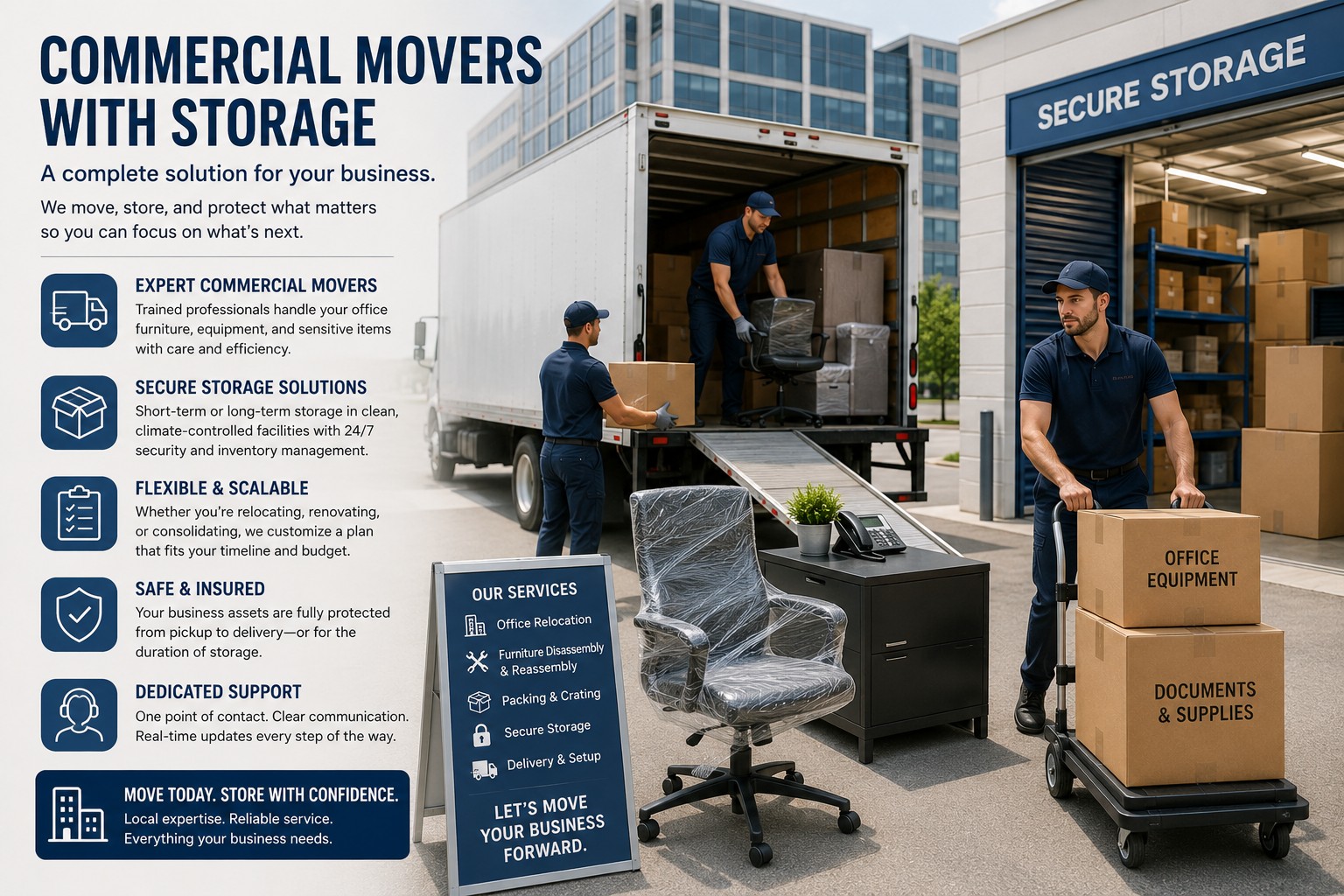
An office relocation becomes considerably more complicated when some company property is moving to a new workplace and the rest is going into storage. Desks may need to reach the new office immediately, while surplus chairs, archived files, equipment, or inventory might remain off-site for weeks or months.
The solution is not simply hiring movers and adding storage to the checklist. The two parts should be planned together. A coordinated approach gives the moving crew clear instructions and helps the business avoid unnecessary handling, misplaced items, and interruptions to daily operations.
Decide Where Everything Goes Before Loading
The most important decision should happen before the first piece of furniture leaves the office.
Walk through the workplace and divide assets into clear destinations: the new office, storage, disposal, donation, or another company location. Avoid making these decisions while movers are already carrying furniture toward the truck.
Create Destination Categories
Useful categories might include:
- Immediate office setup
- Secondary office furniture
- Archived records
- Surplus equipment
- Seasonal materials
- Business inventory
Each category should have a corresponding label or identifier so movers can distinguish it quickly.
Nevada Movers can help businesses in the Las Vegas area coordinate the physical side of a relocation, while a clear destination plan keeps the moving process organized. More information about the company is available at https://nevadamoverslv.com/.
Match the Loading Sequence to the Storage Plan
Loading order matters when a commercial move involves two destinations. Items heading to the new office should not become trapped behind furniture that is being placed into storage.
Discuss the sequence before moving day. If the storage shipment is loaded first, for example, it should be positioned in a way that does not interfere with the items needed at the destination.
For larger relocations, separate labeling systems can make the distinction immediately visible.
Prepare a Storage Inventory
Business storage becomes much easier to manage when every stored item is documented.
Create an inventory before packing. Record box numbers, furniture descriptions, departments, general contents, and intended retrieval priority.
Use Consistent Labels
A label such as “Storage” is too vague for a large commercial archive. Consider including a department and identifying code.
For example:
HR-021 — Archived personnel materials
IT-009 — Spare equipment
OPS-034 — Seasonal supplies
This system allows employees to identify stored property without opening multiple containers.
Keep Business-Critical Items Out of Storage
Not everything that is temporarily unnecessary should disappear into storage.
Ask department managers which items could become important during the transition. Spare technology, active files, replacement equipment, and frequently used supplies may need to remain accessible.
If an item is likely to be requested within the next few days, consider whether it should go directly to the new office instead.
This simple distinction can prevent avoidable retrieval requests after the move.
Prepare Furniture for Its Destination
Office furniture should be prepared differently depending on where it is going.
Items headed directly to the new workplace may need to be assembled quickly, while furniture entering storage should be protected for a longer waiting period.
Empty cabinets and desks, remove detachable components where appropriate, and keep hardware with the corresponding furniture. Protect finished surfaces against scratches and label large pieces individually.
Coordinate Access at Both Locations
A commercial relocation can involve multiple access requirements. The old office may have a loading dock reservation, while the new property could impose delivery windows, elevator restrictions, or security procedures. The storage facility may have its own access rules as well.
Create one schedule covering all three points rather than managing them separately.
Nevada Movers can work from the access and timing information provided by the business, helping the physical relocation stay aligned with the broader plan.
Use Business Storage as a Staging Tool
Storage does not always have to be a long-term solution. It can provide breathing room while the new office is being renovated, redesigned, or gradually occupied.
Business storage can also help companies avoid overcrowding a newly leased space. Nonessential furniture and materials can remain elsewhere until each department is ready to use them.
The key is knowing what should return first and what can remain untouched.
Plan Retrieval Before the Move Is Finished
Before the storage portion begins, identify the expected retrieval sequence. Keep records of which items are most likely to be requested and where they are located.
If the business expands, changes its layout, or receives additional equipment, update the inventory rather than relying on the original packing list.
For Las Vegas companies managing a commercial transition, an organized storage strategy can turn a complicated two-destination move into a controlled process. By separating assets early, coordinating loading order, documenting stored property, and synchronizing access schedules, businesses can reduce disruption while keeping valuable office resources available for the next stage of growth.